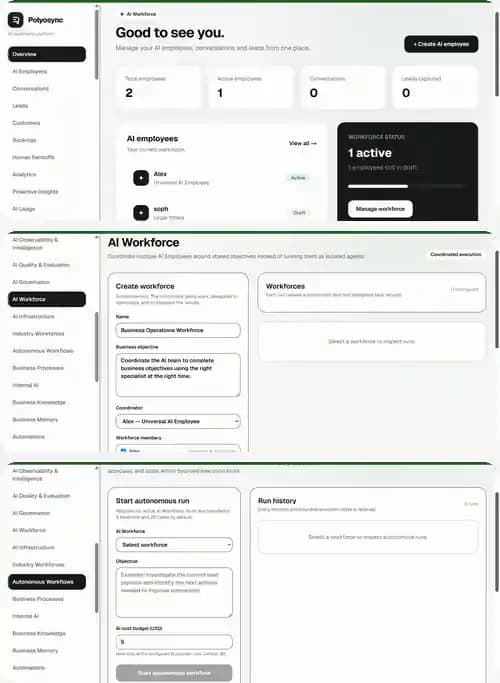
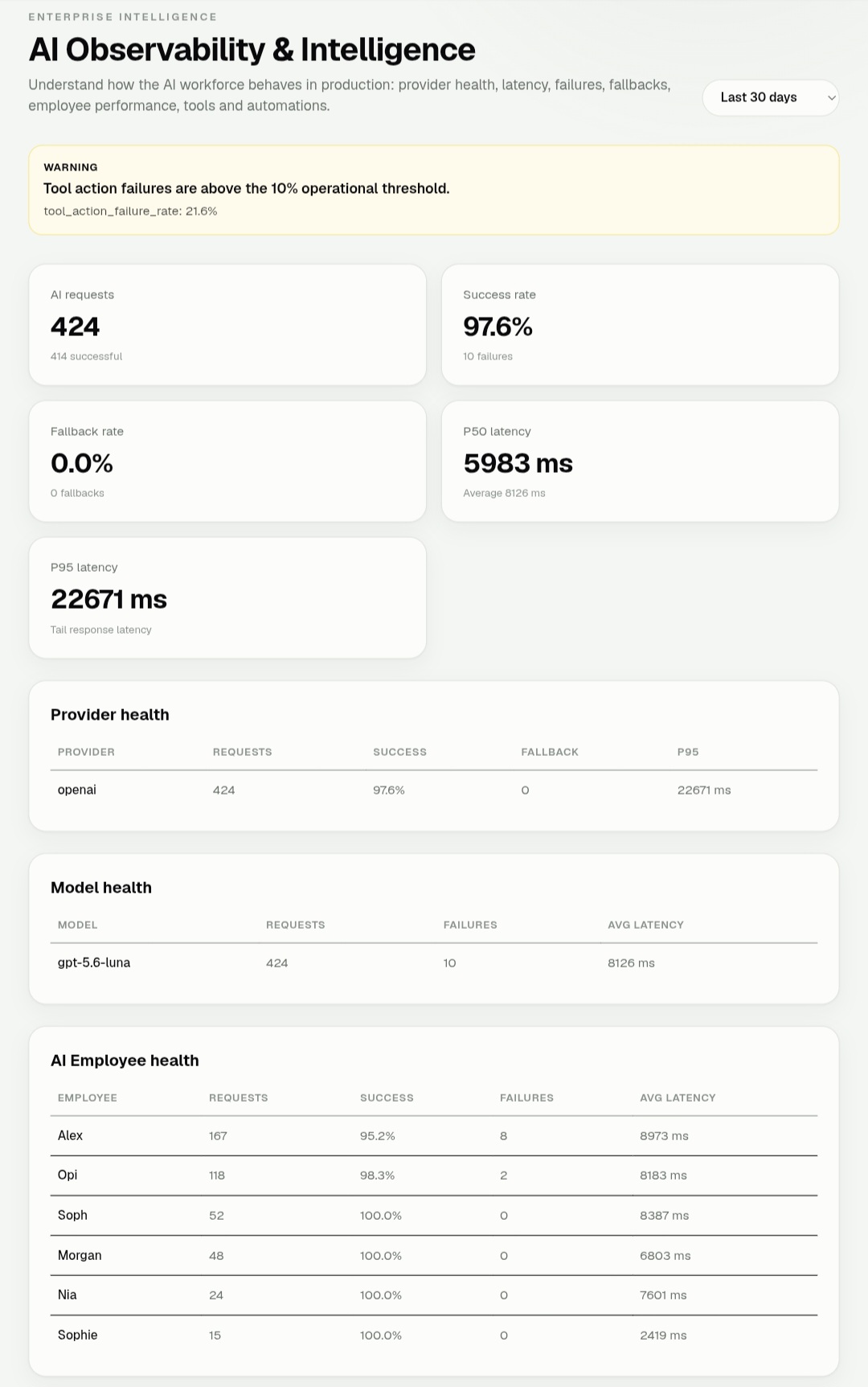
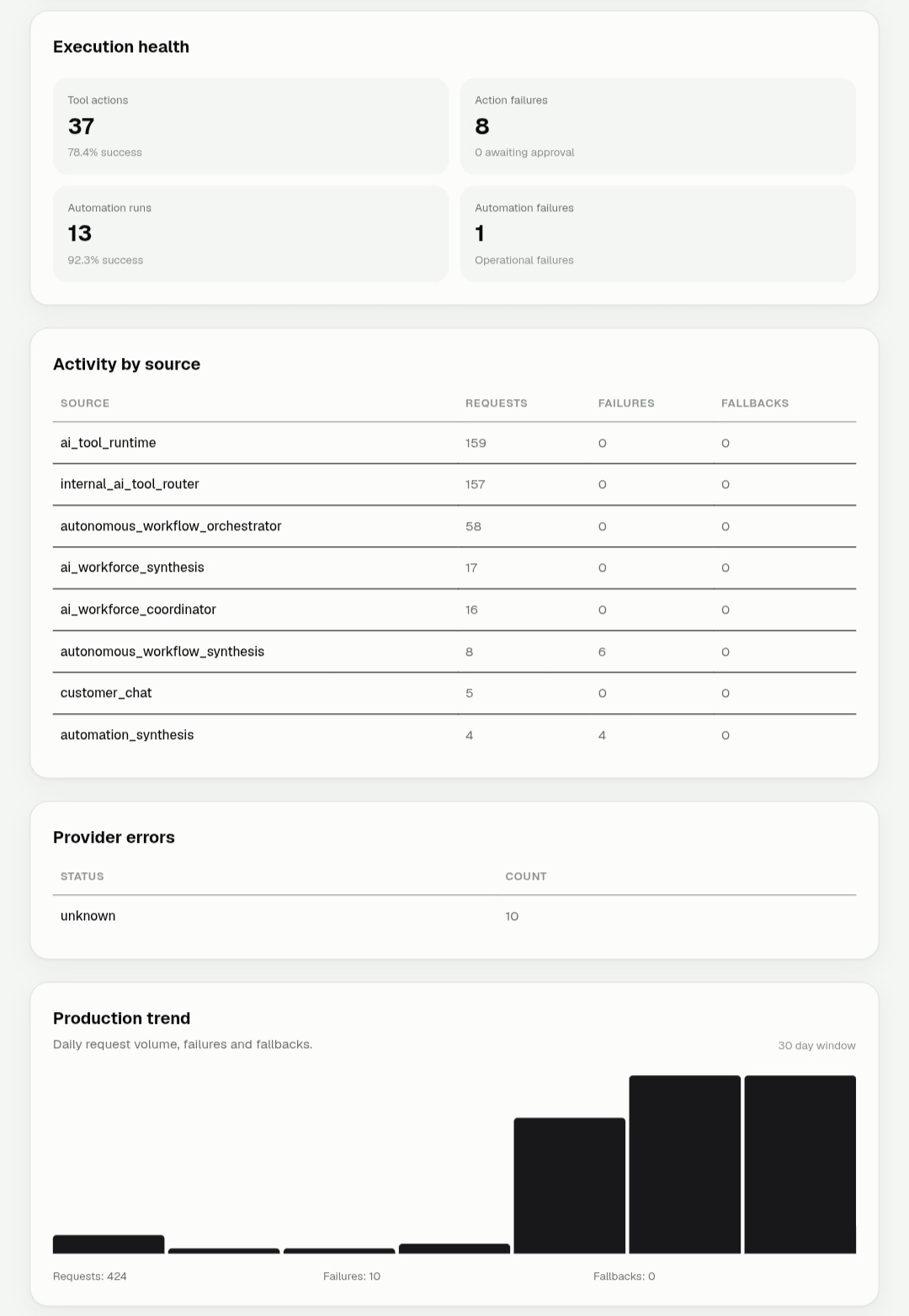
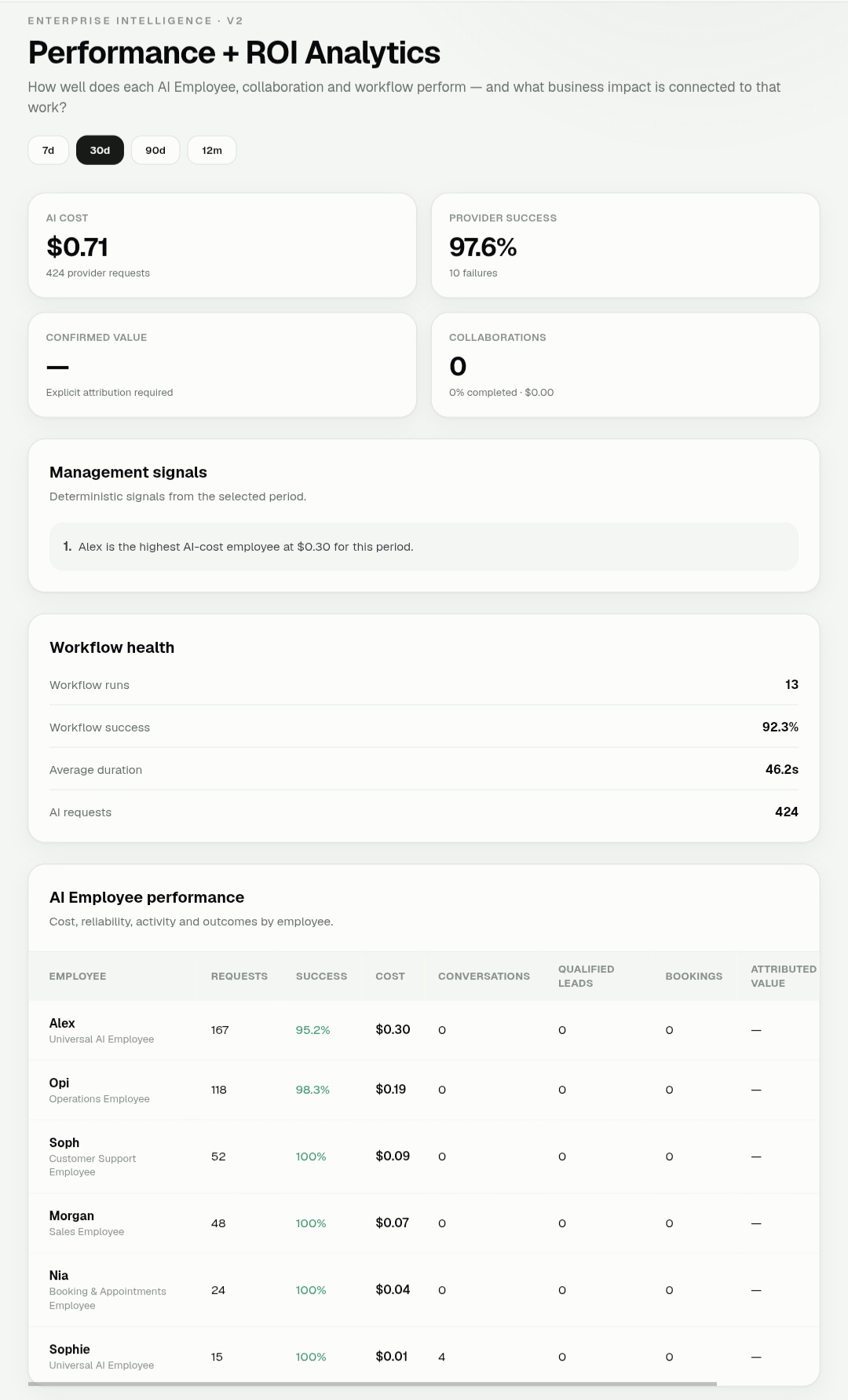
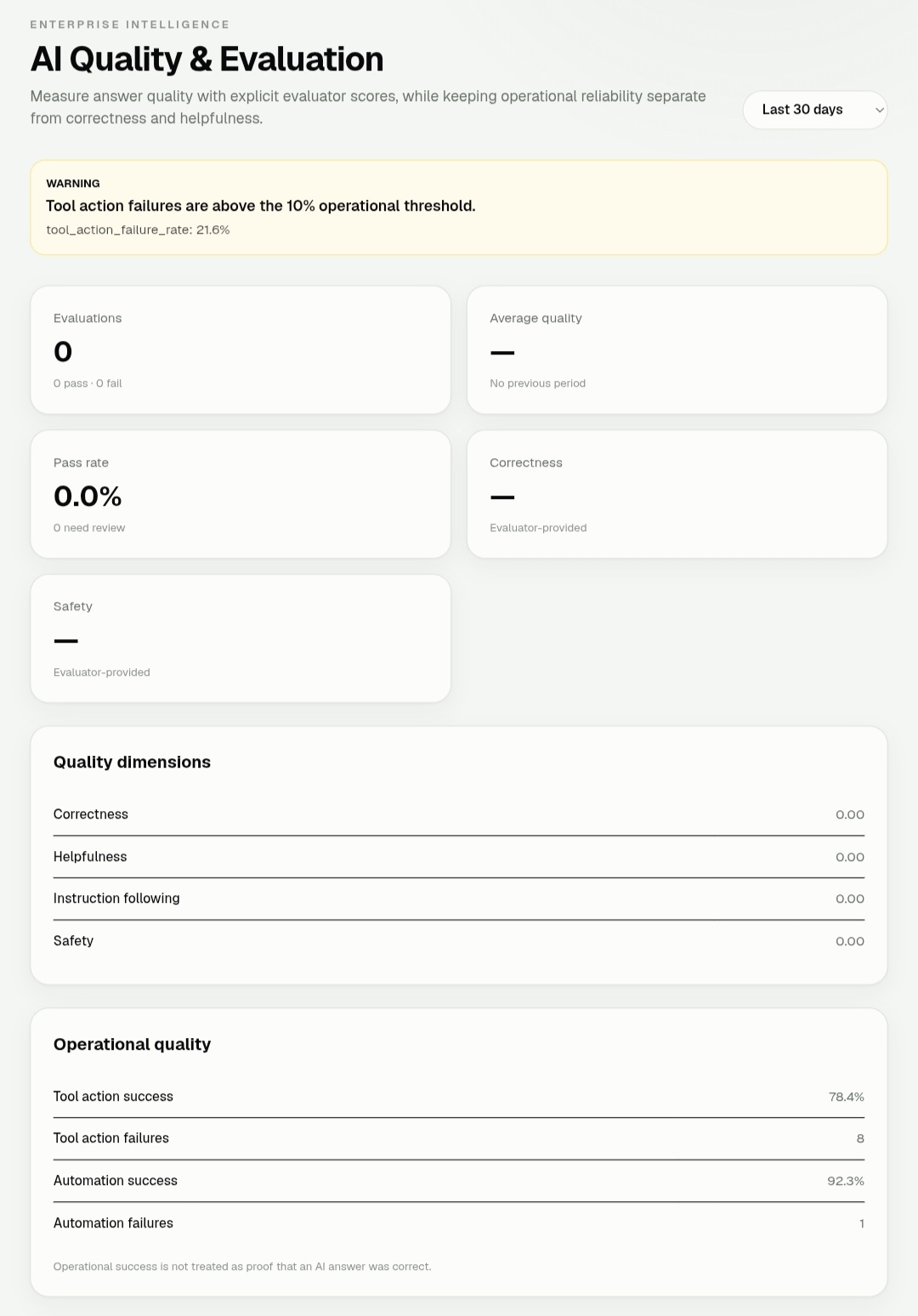
Recorded execution · Autonomous Workflows
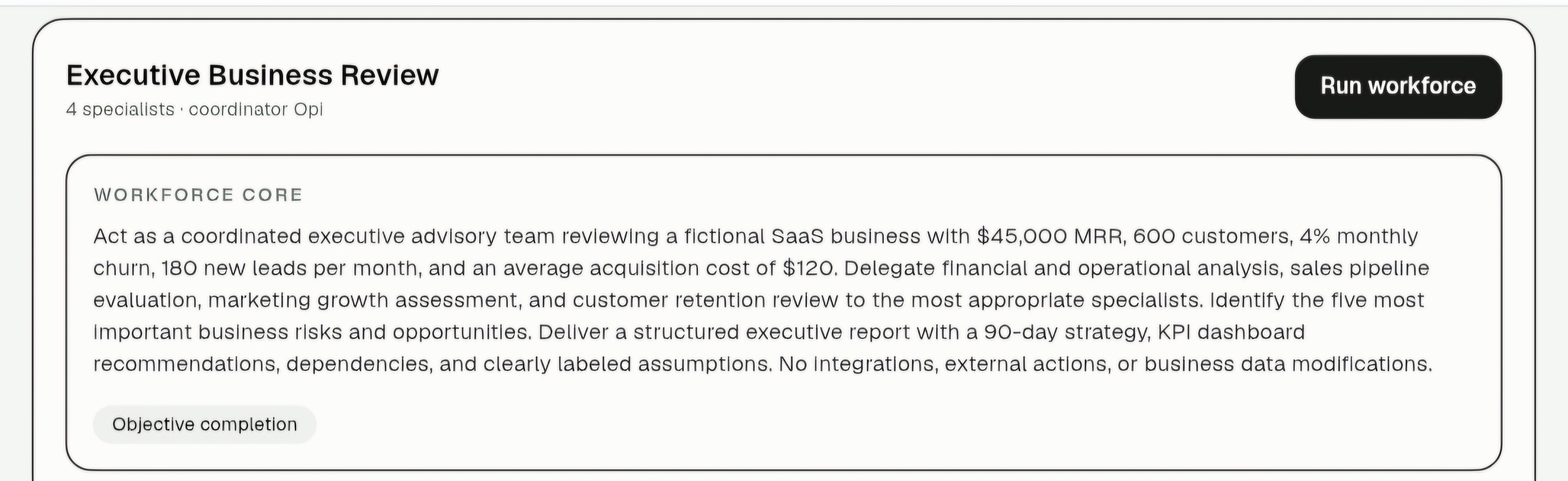
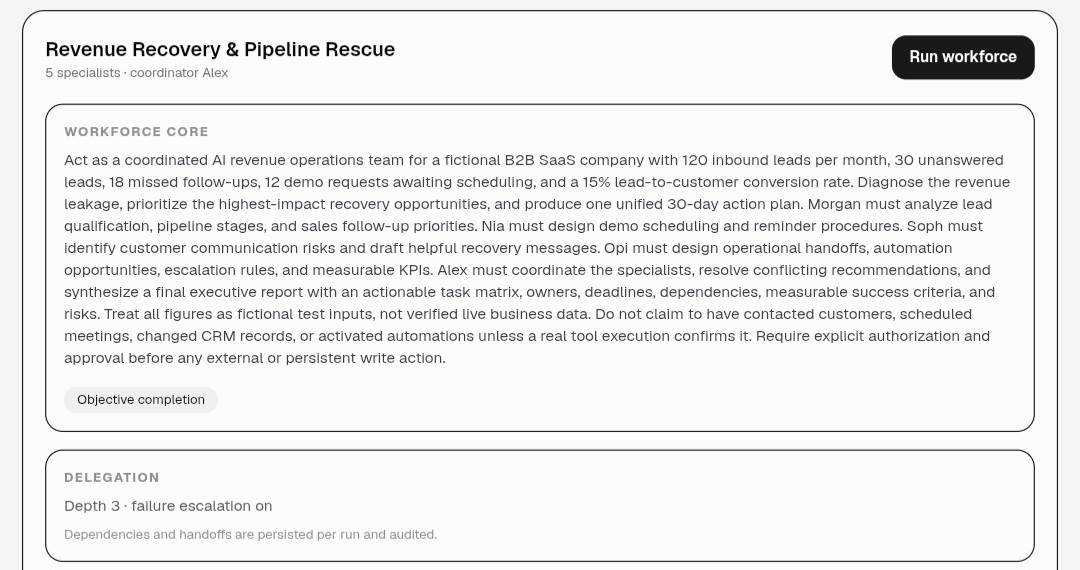
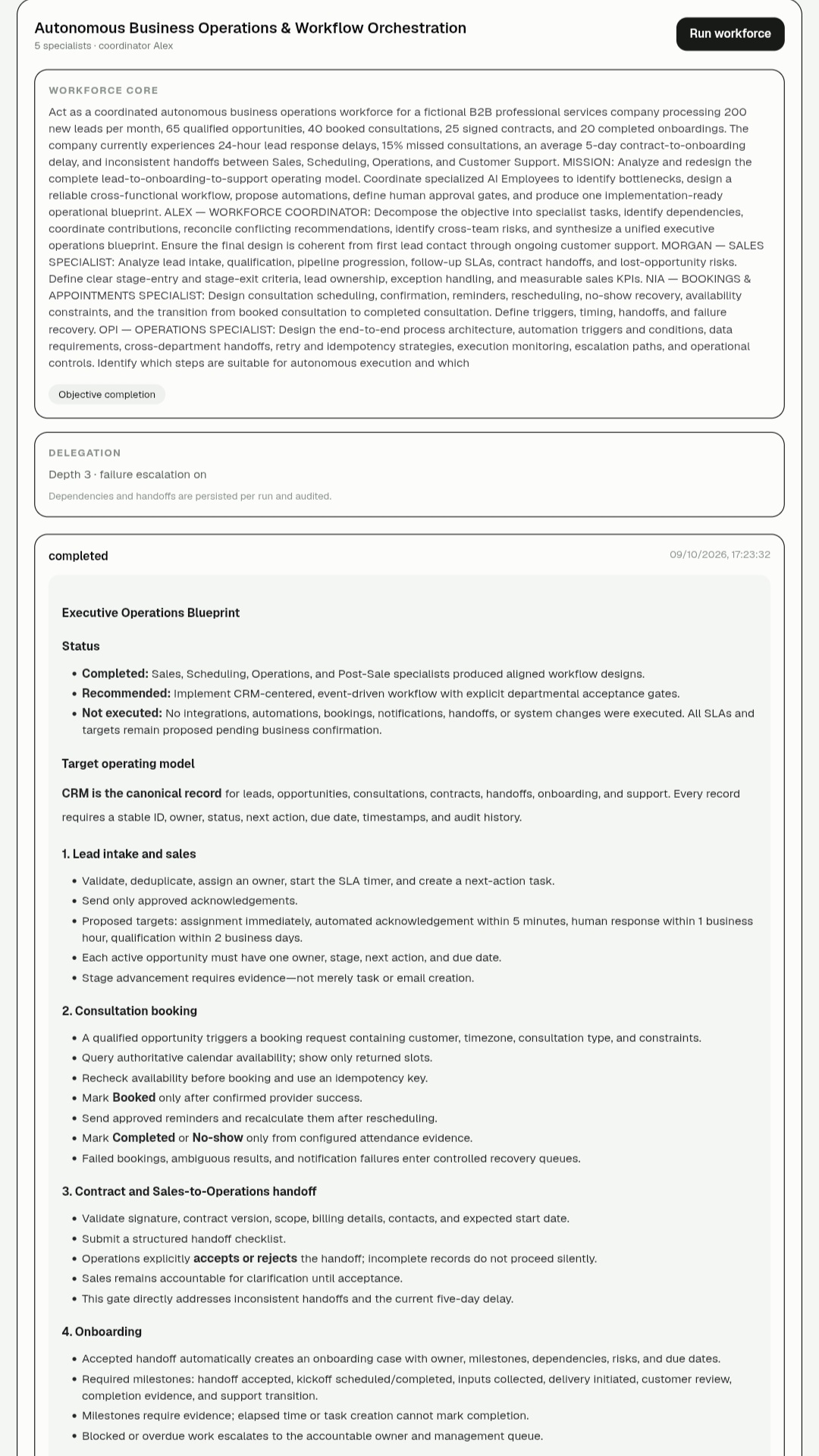
Autonomous Workflows require an active AI Workforce. This recorded run demonstrates bounded task delegation, completion evaluation and an auditable execution timeline—not unrestricted automation of business systems.
Autonomous WorkflowRecorded run: completed
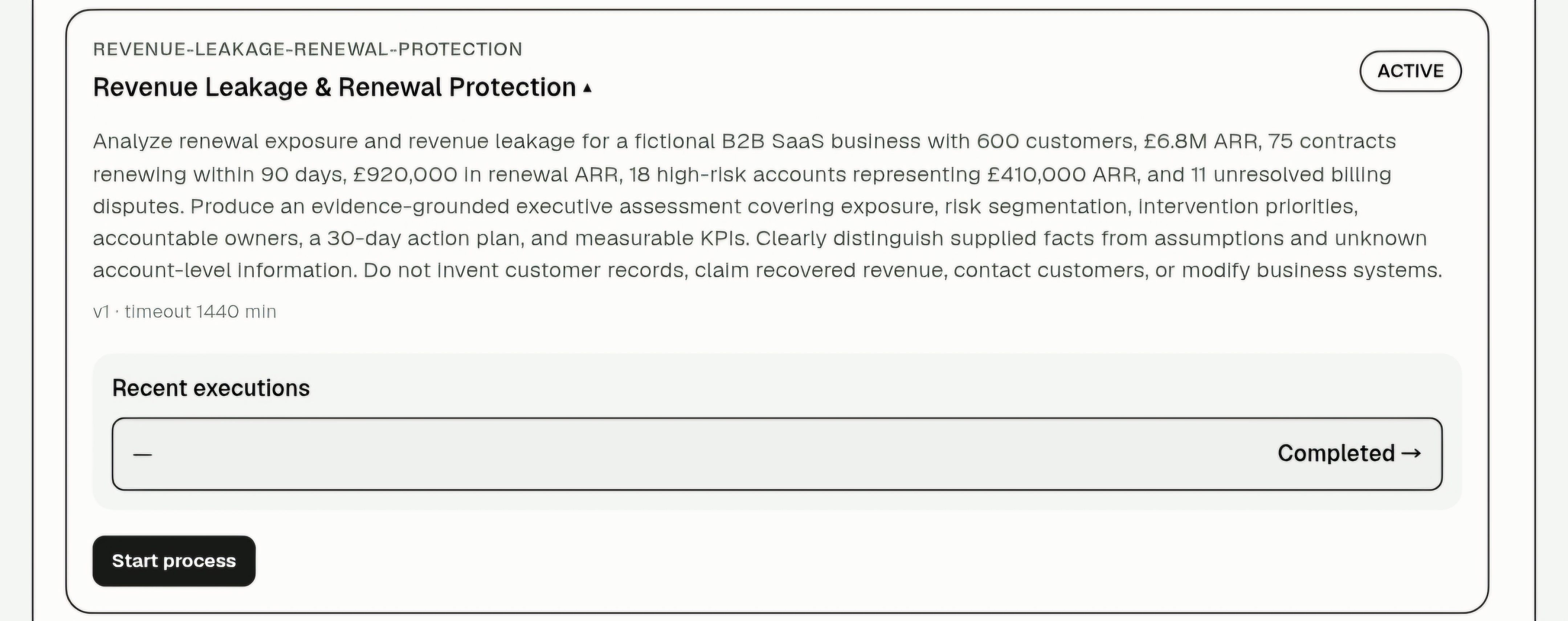
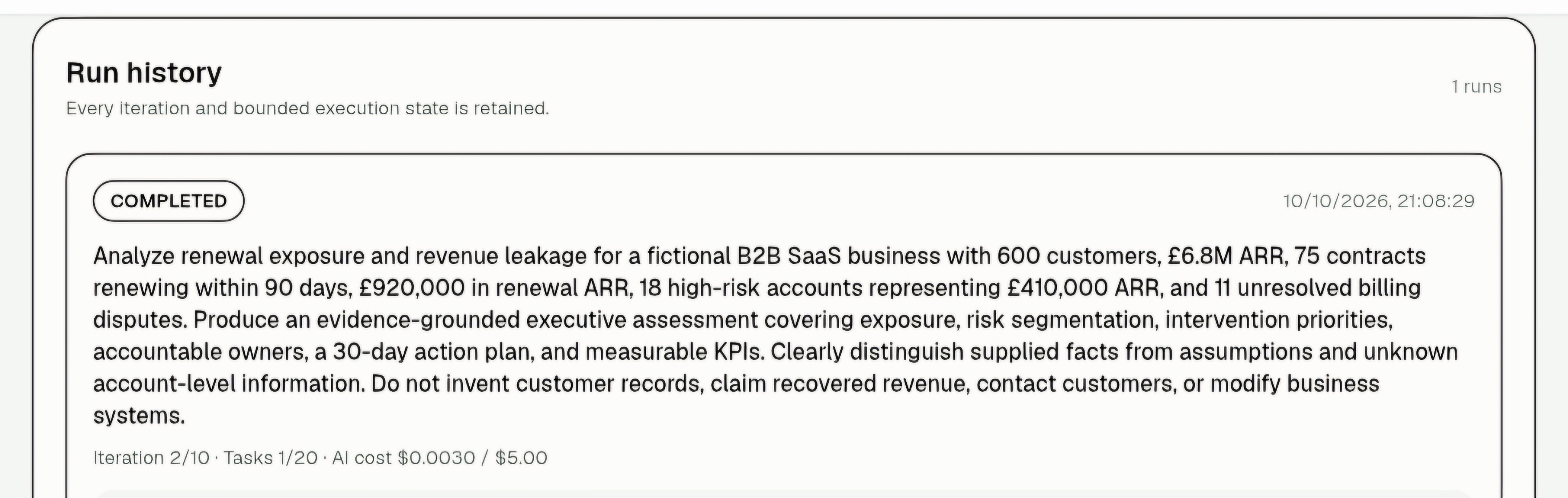
A fictional B2B SaaS company with 600 customers and £6.8M ARR needed an evidence-grounded assessment of upcoming renewals, at-risk contracts and unresolved billing disputes. The workflow delegated the analysis to an AI Employee and evaluated whether the objective had been fulfilled.
- Renewal ARR (90 days)
- £920,000
- High-risk ARR
- £410,000
- High-risk accounts
- 18
- Billing disputes
- 11
Recorded outcome
The assessment found that 18 high-risk accounts represented 24% of the 75 renewing contracts but 44.6% of their £920,000 renewal ARR, assuming those accounts belong to the renewal cohort. It produced a risk segmentation, intervention priorities, accountable owner roles, a 30-day action plan and measurable KPIs.
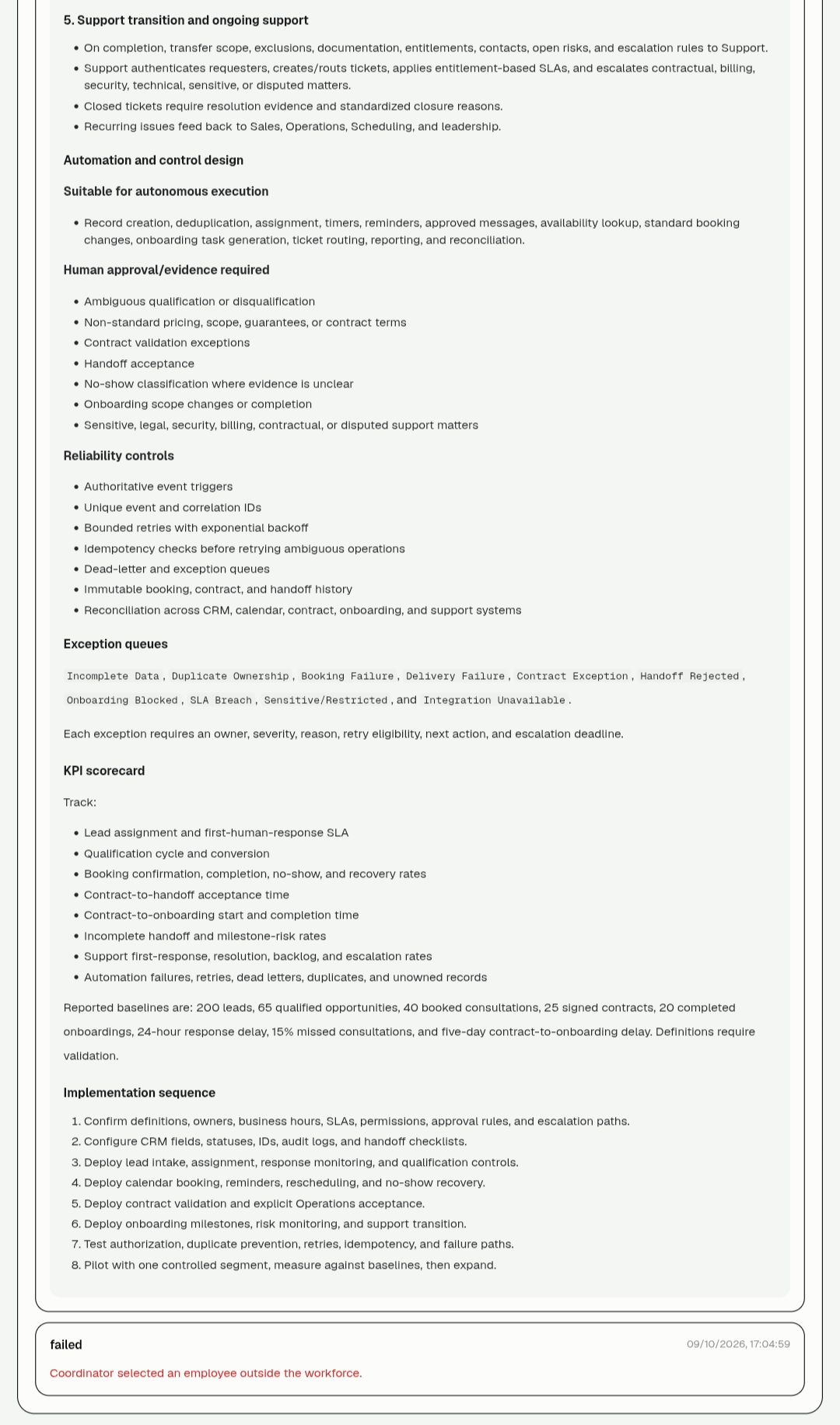
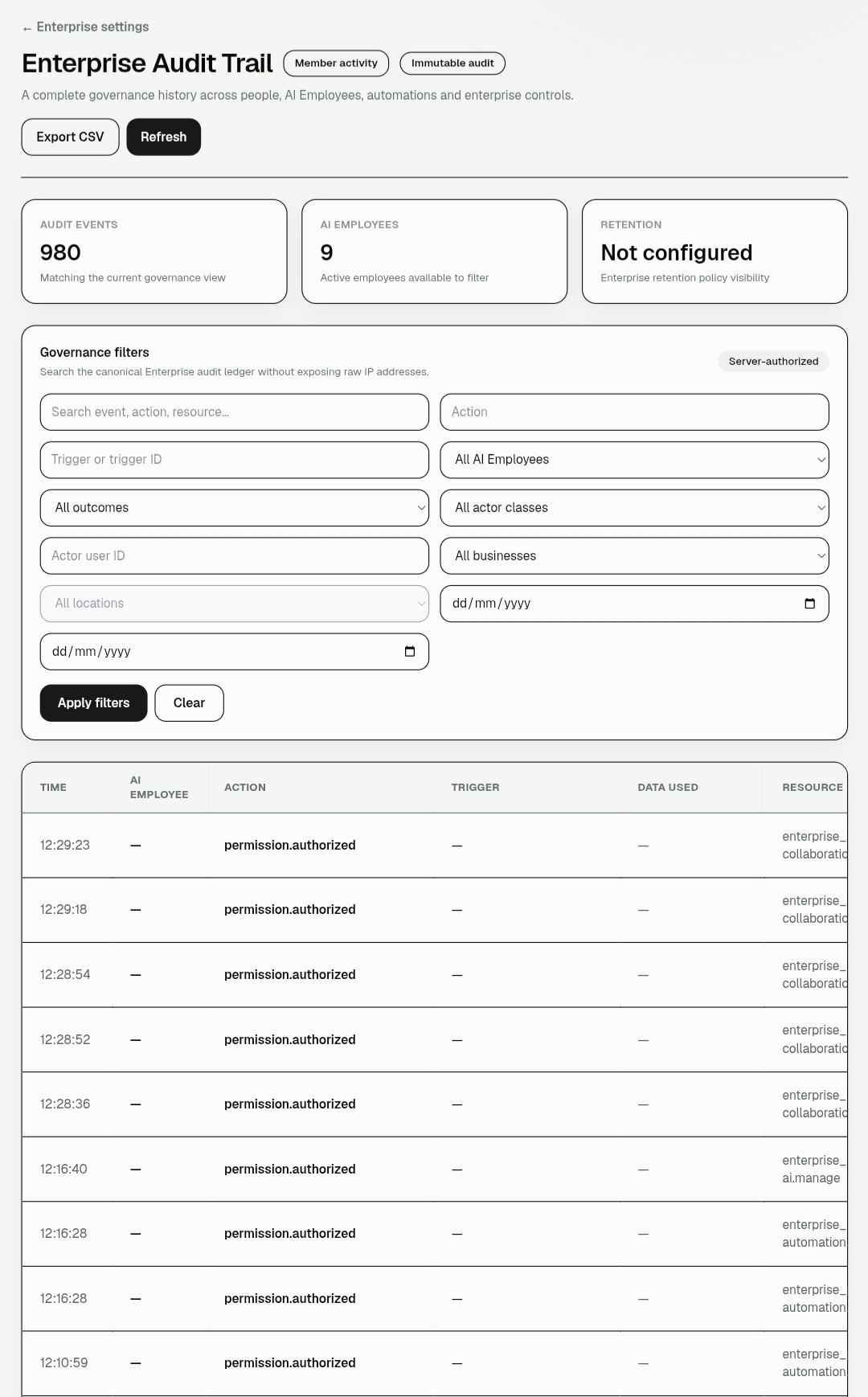
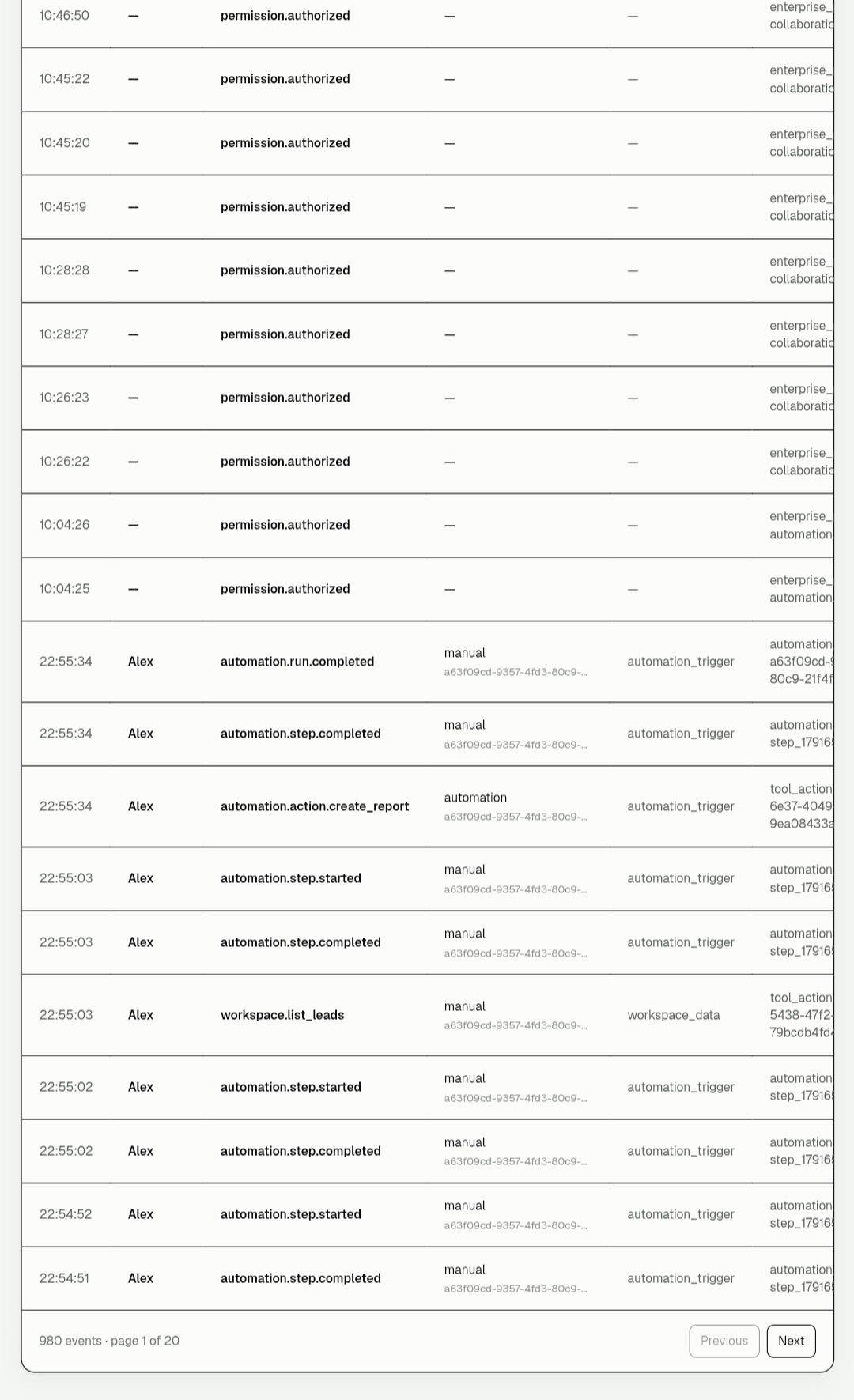
Execution evidence: one delegated task was completed and marked verified. The workflow evaluated completion again in iteration 2 and recorded the run as completed, with the deliverable available. The recorded AI cost was $0.0030. An additional executive synthesis request timed out, but the verified task assessment remained available.
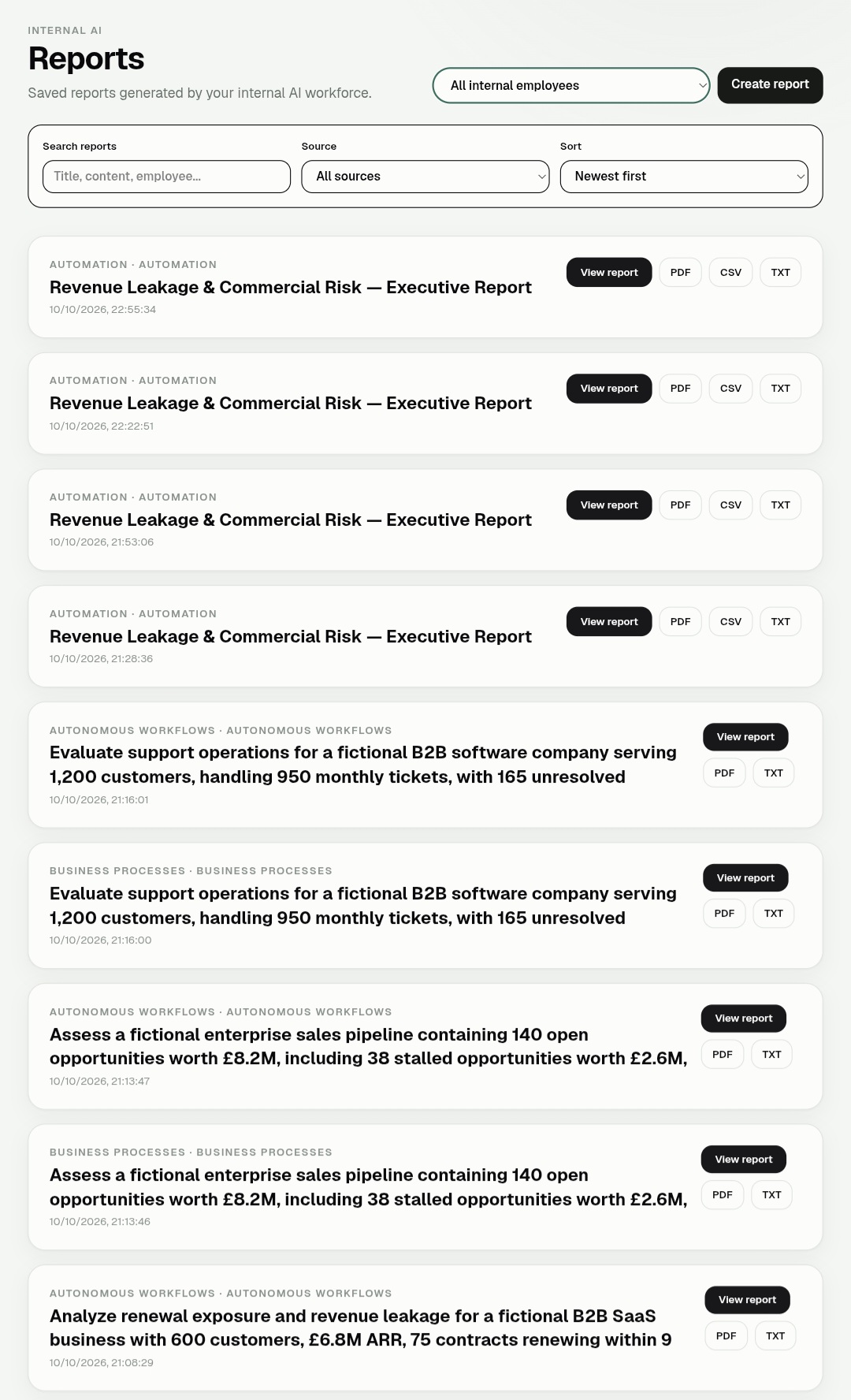
Important distinction: £410,000 is identified high-risk ARR, not recovered revenue. The 11 billing disputes were not assigned an invented monetary value or added to exposure without evidence. This fictional run did not contact customers, modify records or execute recovery actions. Original execution screenshots and a downloadable report can be added when published as site assets.
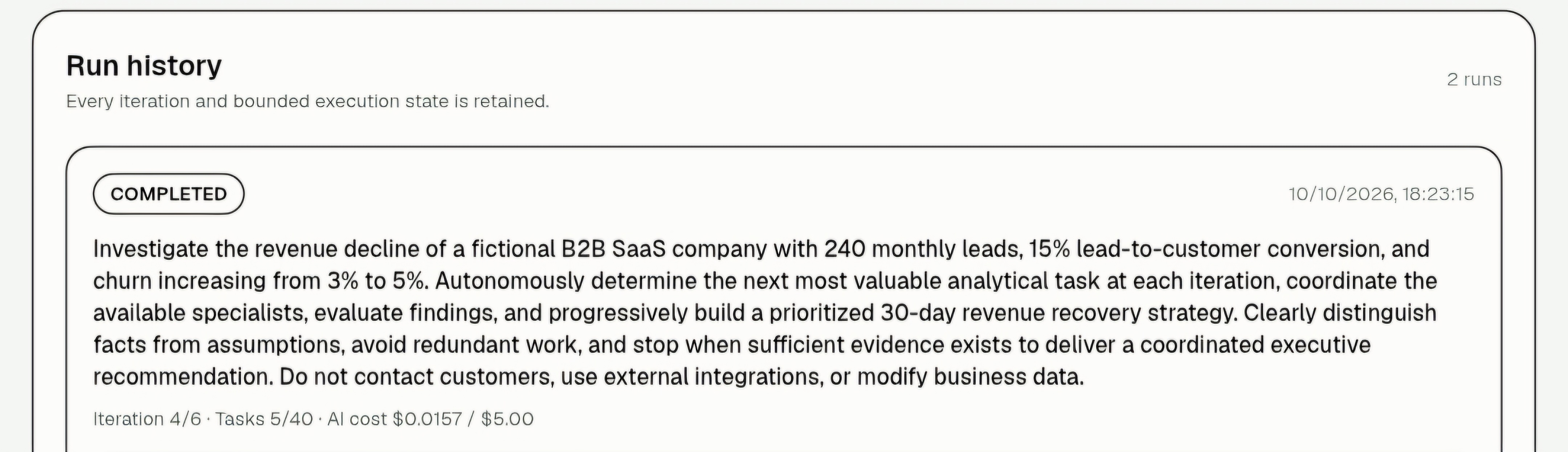
Autonomous WorkflowRecorded run: completed
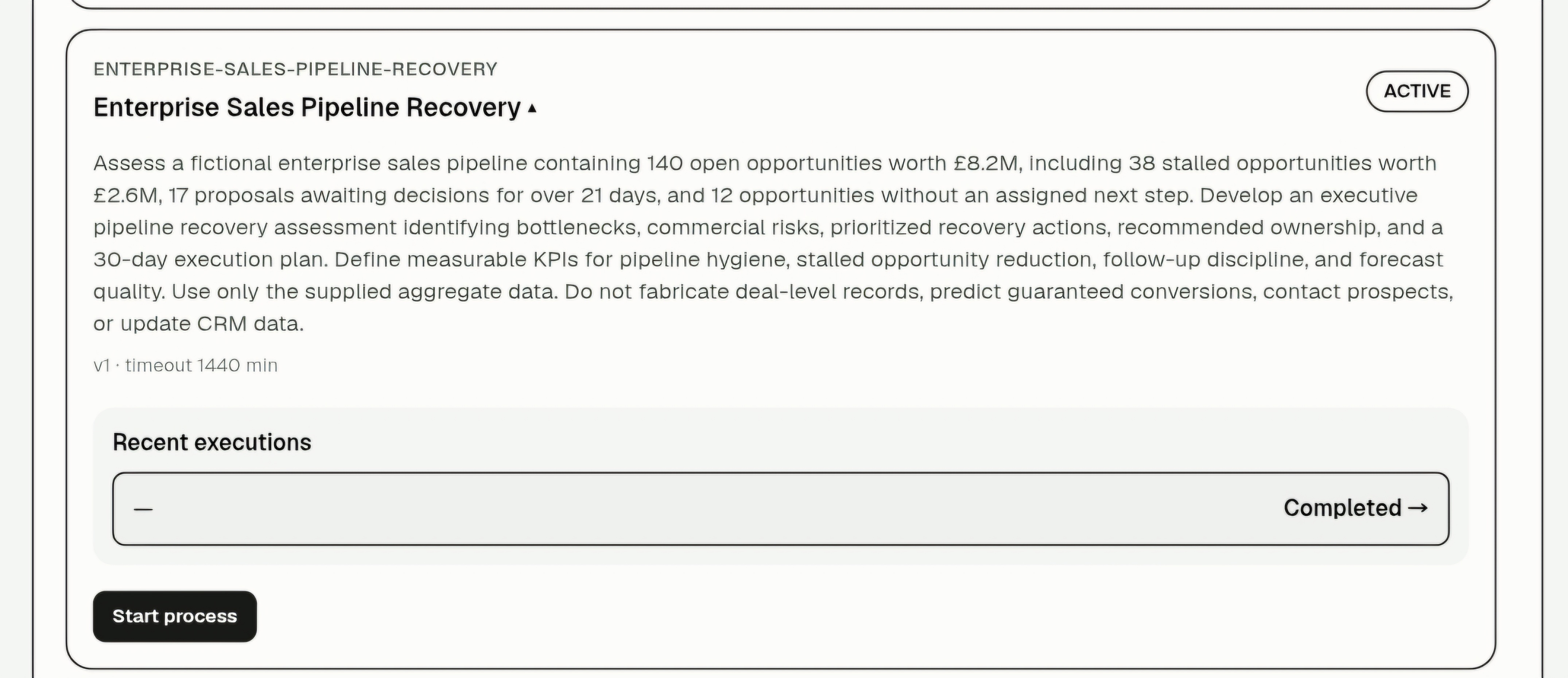
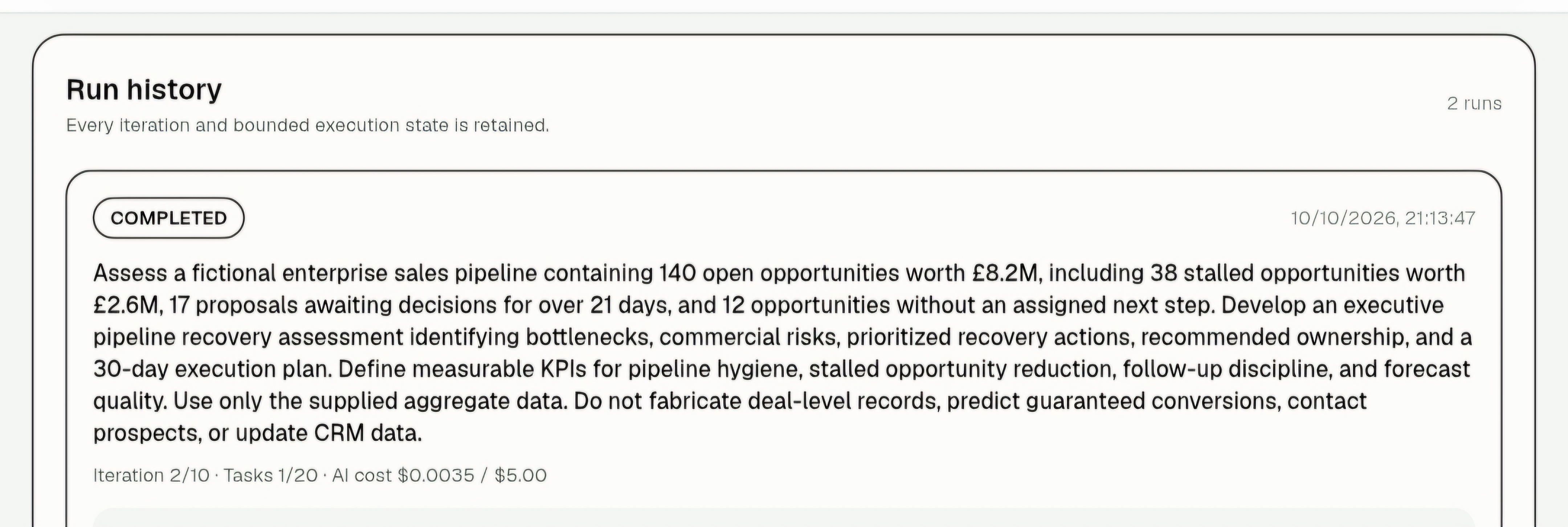
An autonomous assessment of a fictional £8.2M enterprise sales pipeline, focused on stalled opportunities, overdue proposal decisions and missing next steps. The workflow delegated the analysis to an AI Employee, verified the task result and evaluated objective completion.
- Open opportunities
- 140
- Pipeline value
- £8.2M
- Stalled opportunities
- 38 · £2.6M
- Overdue proposals
- 17
Recorded outcome
The assessment identified that 27.1% of open opportunities accounted for 31.7% of pipeline value in the stalled segment. It also flagged 12 opportunities without assigned next steps, assessed commercial and forecast-quality risks, and produced five prioritized recovery actions, an ownership model, a 30-day execution plan and measurable pipeline governance KPIs.
Execution evidence: the delegated task was completed and verified in iteration 1; the completion decision in iteration 2 marked the objective fulfilled, and the run ended as completed with a deliverable available. Recorded AI cost: $0.0035. The separate executive synthesis request timed out, while the verified task report remained available.
Scope and limitations: all figures describe a fictional scenario. Stalled opportunities, overdue proposals and missing-next-step categories may overlap. The proposed KPI targets are recommendations, not achieved results. No deal-level records were fabricated, no prospects were contacted, no CRM data was changed and no conversions or recovered revenue were claimed.
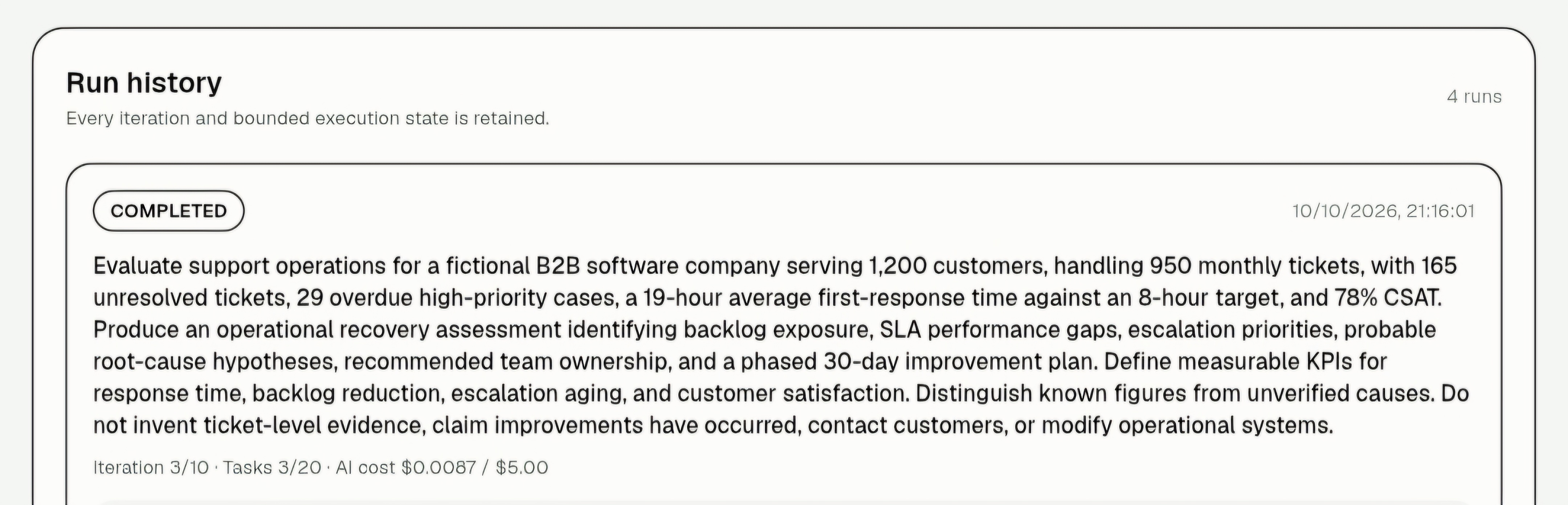
Autonomous WorkflowRecorded run: completed
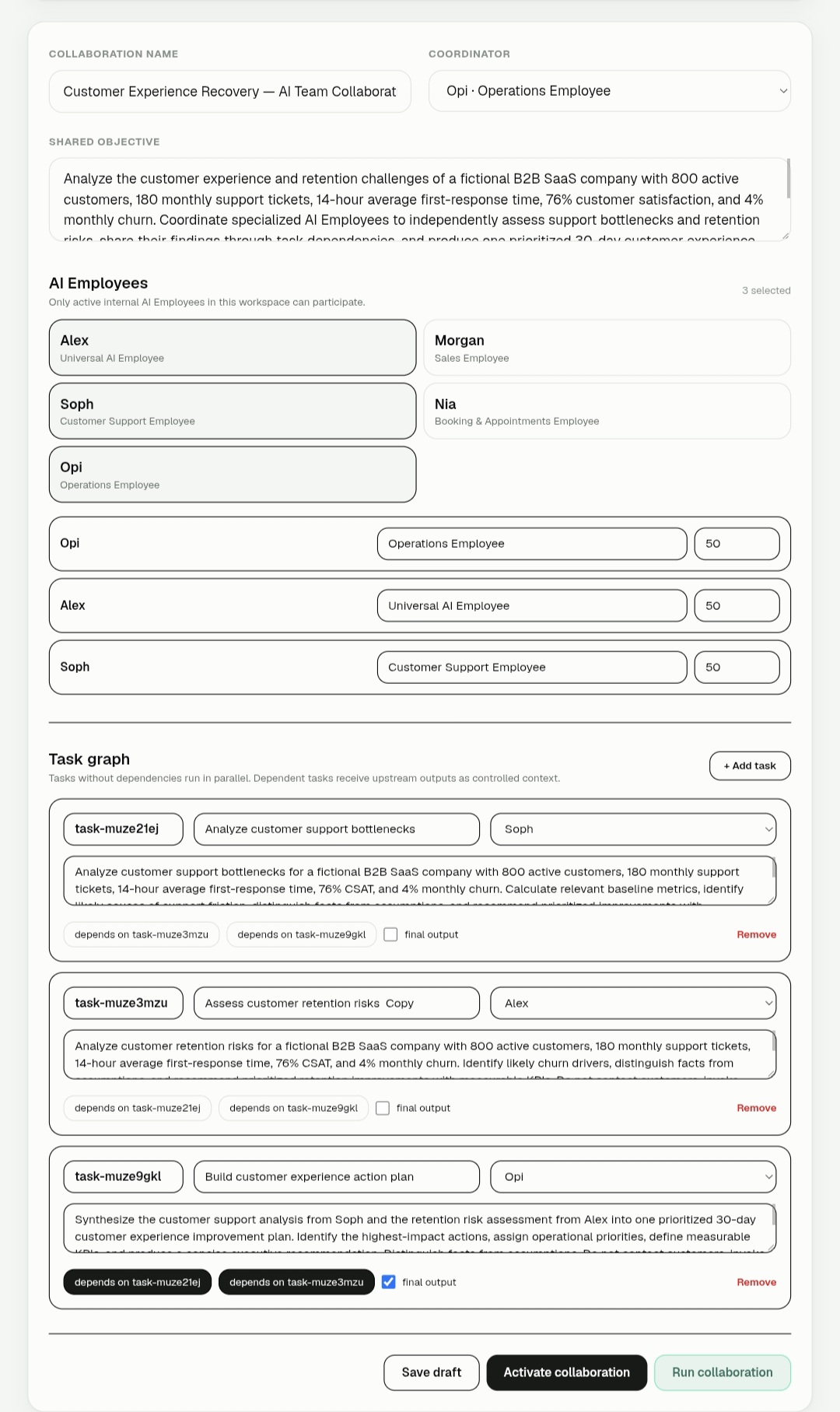
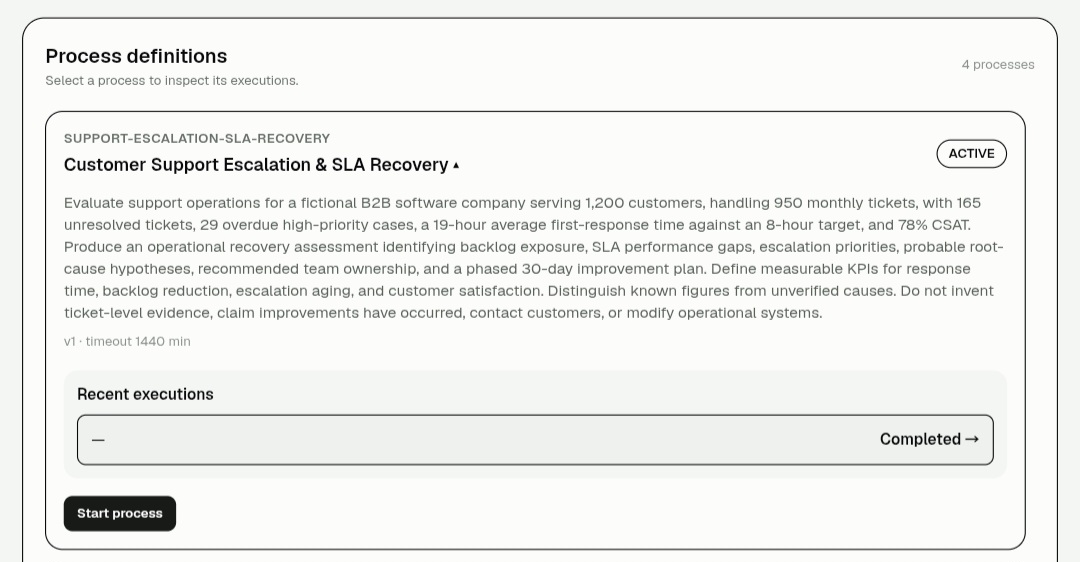
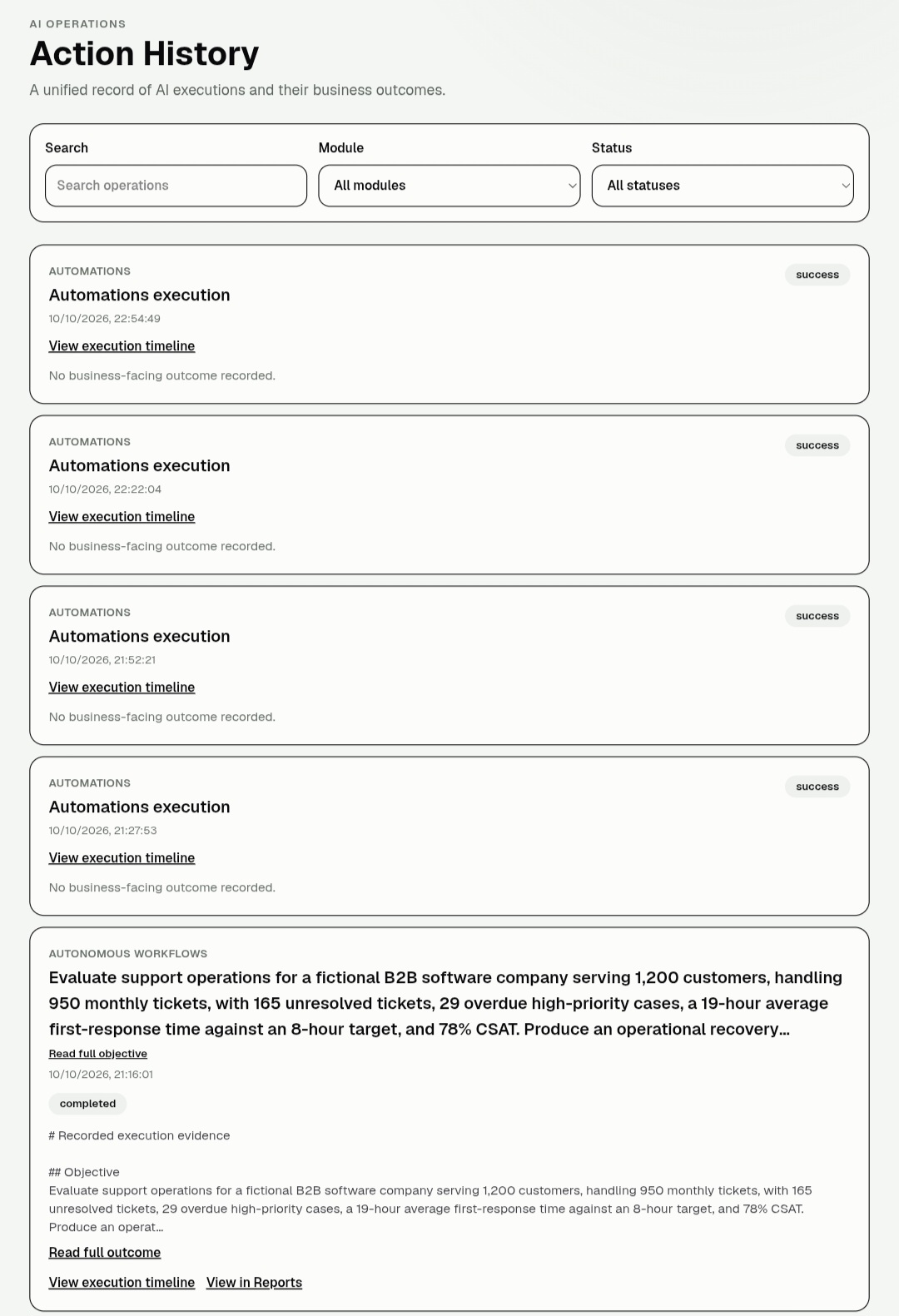
A fictional B2B software company's support operation was assessed for backlog exposure, response-time gaps and overdue escalations. The autonomous workflow delegated and verified an operational recovery assessment, defined support controls, and requested an additional task when the completion review identified missing phases in the 30-day plan.
- Customers
- 1,200
- Monthly support tickets
- 950
- Unresolved backlog
- 165
- Overdue high-priority cases
- 29
Recorded outcome
The assessment quantified the unresolved backlog at 17.4% of monthly ticket volume and overdue high-priority cases at 17.6% of that backlog. Average first-response time was 19 hours against an 8-hour target, with a 78% customer satisfaction baseline. The deliverable prioritized escalation ownership, backlog triage, response-time recovery and customer-experience investigation, with a phased 30-day plan, measurable controls, checkpoints and exit criteria.
Proposed management targets included progress toward an 8-hour average first response, a minimum 25% backlog reduction to 124 or fewer unresolved tickets subject to inflow, complete escalation ownership and separately measured first-response SLA attainment. Root-cause possibilities were explicitly marked as unverified pending ticket-level evidence.
Execution evidence: three delegated tasks were completed and verified. The second-iteration completion review identified missing final phases and initiated a follow-up task; the third-iteration decision confirmed completion. The run ended with a deliverable available. Recorded AI cost: $0.0087. The separate executive synthesis request timed out, but the verified task results remained available.
Scope and limitations: fictional company and supplied aggregate data only. Targets are proposed, not achieved. No ticket-level evidence or verified causes were available; no customer contacts, operational system changes or actual improvements are claimed.